The Architect’s Verdict: South Goa vs. North Goa for Luxury Villa Investment — CRZ Compliance, Material Engineering & Yield Analysis
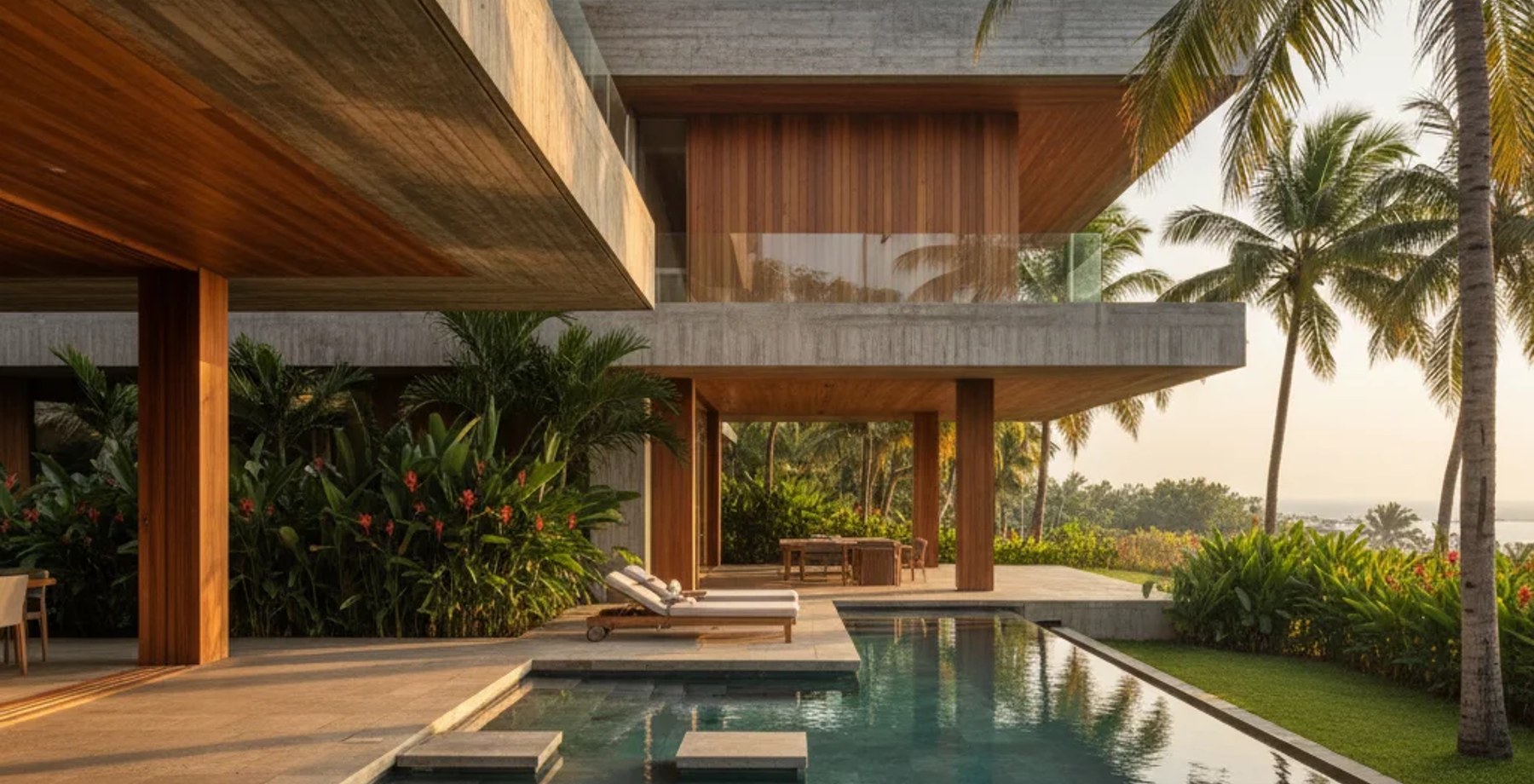
Table of Contents (17 sections)▼
# The Architect’s Verdict: South Goa vs. North Goa for Luxury Villa Investment
In the current Indian real estate landscape, Goa remains the singular destination for high-yield luxury hospitality assets. However, the dichotomy between North and South Goa is no longer merely geographic; it is a fundamental divergence in architectural typology, regulatory risk, and financial engineering.
For the investor, the choice is not about "where to live," but "how to build" and "how to monetize." North Goa offers a high-velocity, high-density tourism model constrained by tight inventory and aggressive CRZ (Coastal Regulation Zone) enforcement. South Goa presents a lower-density, estate-based model with greater spatial freedom and distinct material engineering opportunities.
This guide dissects the architectural and financial realities of both regions, moving beyond marketing brochures to examine the structural, regulatory, and operational fundamentals that determine long-term asset value.
1. The Regulatory Framework: CRZ Rules & Buildable Footprint
The Coastal Regulation Zone (CRZ) notification is the single most critical determinant of architectural feasibility in Goa. Misunderstanding these zones leads to project stagnation or demolition orders.
CRZ Zone-I (Ecologically Sensitive)
- Location: Primarily North Goa beachfronts (Assagao, Vagator, Morjim).
- Constraint: No new construction. Only existing structures can be maintained or minimally renovated.
- Investment Implication: Extremely limited inventory. High premium for existing, legally compliant assets. Any "new" villa here is likely illegal or a minor extension of an older structure.
CRZ Zone-II (Developed Areas)
- Location: Inland North Goa (Anjuna, Siolim) and most of South Goa (Benaulim, Colva, Majorda).
- Constraint: Building height restrictions (typically 30m or 10 stories, but often lower in villa clusters). Setback requirements from the High Tide Line (HTL) are strict.
- Investment Implication: The primary zone for new luxury villa construction. In North Goa, land scarcity drives up per-square-foot costs. In South Goa, larger plot sizes allow for better architectural composition and privacy.
CRZ Zone-III (Rural/Undeveloped)
- Location: Inland South Goa (Agonda, Palolem hinterlands).
- Constraint: Lower density, specific material restrictions (often banning concrete in favor of local materials in certain eco-tourism zones).
- Investment Implication: Ideal for boutique eco-resorts or private estates. Requires careful material selection to comply with "green building" mandates.
2. Architectural Typology & Material Engineering
The architectural language of North and South Goa villas differs significantly due to site conditions, client demographics, and micro-climate variations.
North Goa: The Compact Luxury Model
- Typology: High-density, multi-story (2-3 floors), vertical stacking to maximize sea views.
- Structural Challenge: Limited plot sizes (often < 2,000 sq ft) require efficient structural grids.
- Material Specification:
- Glazing: Schüco AWS 75 or 90 series for large-format, low-profile frames. Essential for maximizing light in compact footprints.
- Finishes: High-gloss porcelain or Statuario marble for wet areas to withstand high humidity and frequent cleaning cycles.
- HVAC: Daikin VRV (Variable Refrigerant Volume) systems are mandatory. Compact villas have high internal heat loads from dense glazing; VRV allows zoned control for energy efficiency.
- Hardware: SS316L (Marine Grade) stainless steel for all exterior hardware. North Goa’s proximity to the Arabian Sea means higher salt corrosion; SS304 will fail within 3-5 years.
South Goa: The Estate & Privacy Model
- Typology: Low-rise, sprawling, single or double-story with large setbacks. Focus on indoor-outdoor flow.
- Structural Challenge: Large spans for open-plan living areas. Requires robust structural engineering for long cantilevers.
- Material Specification:
- Glazing: Schüco ADS 75 sliding systems for seamless indoor-outdoor transitions. Larger glass panels (up to 3m x 2.5m) are feasible due to larger plot footprints.
- Finishes: Natural stone (Travertine, Limestone) and teak wood. South Goa’s slightly cooler micro-climate allows for more natural materials that breathe.
- HVAC: Daikin VRV with larger capacity units for open-plan spaces. Integration with passive cooling strategies (cross-ventilation, shaded terraces) is more effective here.
- Hardware: SS316L is still recommended, but the lower density of development means less exposure to industrial pollution, allowing for slightly less aggressive maintenance cycles.
3. Financial Comparison: Yield, Appreciation & Cost
The following table compares the key financial metrics for luxury villa investments in both regions.
Analysis of Rental Yields
- North Goa: The 6-9% yield is driven by high nightly rates (₹25,000–₹50,000/night) during peak season (Nov-Feb). However, this is highly seasonal. Off-season occupancy can drop below 40%. Net yield after management fees, maintenance, and taxes is often closer to 4-6%.
- South Goa: The 3-5% yield is more stable. Long-stay rentals (monthly) are more common, providing consistent cash flow. The lower entry price point means the capital at risk is lower, potentially offering a better risk-adjusted return for conservative investors.
Capital Appreciation
- North Goa: Appreciation is volatile and micro-market dependent. Assagao and Vagator have seen 20%+ annual appreciation due to scarcity. However, the market is saturated with new supply, which can dampen prices in less prime pockets.
- South Goa: Appreciation is steady and predictable. The region is benefiting from infrastructure development (airport expansion, road connectivity) and a growing demand for privacy and space. A 5-7 year horizon typically yields 40-60% total appreciation.
4. Execution Timelines & Regulatory Protocols
Building a luxury villa in Goa is a complex process. Understanding the timeline is crucial for cash flow planning.
Phase 1: Due Diligence & Title Verification (2-3 Months)
- Title Search: Verify 30-year title history. Check for encumbrances, litigation, and CRZ compliance.
- RERA Status: Ensure the project is registered under the Real Estate (Regulation and Development) Act, 2016.
- CRZ Clearance: Obtain a No Objection Certificate (NOC) from the Goa State Coastal Zone Management Authority (SCZMA). This is the most critical and time-consuming step.
Phase 2: Design & Approval (3-4 Months)
- Architectural Design: Develop detailed architectural, structural, and MEP (Mechanical, Electrical, Plumbing) drawings.
- Building Plan Approval: Submit to the Goa Town Planning Department. Expect 2-3 rounds of revisions.
- Environmental Clearance: Required for projects above a certain size or in sensitive zones.
Phase 3: Construction (12-18 Months)
- Foundation & Structure: 4-6 months.
- Finishes & MEP: 6-8 months.
- Landscaping & External Works: 2-3 months.
- Quality Control: Regular inspections by a third-party quality assurance firm are essential. Focus on waterproofing, HVAC performance, and hardware durability.
Phase 4: Occupancy & Rental Launch (1-2 Months)
- Occupancy Certificate (OC): Obtain from the local municipal authority.
- Rental Registration: Register with the Goa Tourism Department if operating as a short-term rental.
- Marketing & Launch: List on premium platforms (Airbnb, Booking.com, Luxury Escapes).
5. The ERENDERS Advantage: Architectural Visualization & Turnkey Execution
At ERENDERS, we do not just design villas; we engineer investment assets. Our approach combines elite architectural visualization with rigorous turnkey execution, ensuring that your investment is both aesthetically stunning and financially robust.
- Architectural Visualization: We provide photorealistic 3D renders and VR walkthroughs, allowing you to visualize the final product before construction begins. This reduces design changes and cost overruns.
- Material Engineering: We source and specify premium materials (Statuario marble, Schüco glazing, Daikin VRV, SS316 hardware) to ensure longevity and low maintenance.
- CRZ Compliance: Our team works closely with legal and regulatory experts to ensure full compliance with CRZ rules, minimizing the risk of project delays or legal issues.
- Turnkey Execution: From foundation to finishing, we manage the entire construction process, providing you with a single point of contact and guaranteed timelines.
6. Conclusion: Which Region Fits Your Investment Strategy?
- Choose North Goa if: You seek high short-term rental yields, are comfortable with higher entry costs, and want to invest in a high-demand, high-visibility market. Focus on Assagao, Vagator, and Siolim for the best combination of yield and appreciation.
- Choose South Goa if: You prioritize long-term capital appreciation, lower entry costs, and a more stable, less volatile rental income. Focus on Benaulim, Colva, and Palolem for the best combination of space, privacy, and growth potential.
The decision is not about which region is "better," but which region aligns with your investment horizon, risk tolerance, and lifestyle preferences.
---
Ready to transform your investment vision into a reality?
At ERENDERS, we specialize in elite architectural visualization and turnkey villa execution in Goa. Our team of architects, engineers, and project managers will guide you through every step of the process, from site selection to final handover.
[Contact ERENDERS Today](https://erenders.in/contact)
Have a critique or feedback on this architectural concept? Join 1,200+ architects and 3D artists in the Roastitects Community Debate Arena.
JOIN ROASTITECTS DEBATE →Frequently Asked Questions
Technical Q&A from this article — answers expanded for depth and SEO.
Looking for more architectural research & spatial studies?
Browse full-width editorial essays, LOD technical specs, and audio folios in the Community Folio.
Just published
10 Stories to Know Right Now
3 stories
- 01ARCHITECTURE9 min reading timeOct 29, 2026BIM & Revit Outsourcing for Indian Architecture Firms: Workflow, LOD Standards & Cost BenchmarksERENDERS Editorial Staff
- 02ARCHITECTURE8 min reading timeOct 24, 2026NRI Remote Home Construction in India: The 3D Digital Twin & Milestone Quality ProtocolERENDERS Editorial Staff
- 03ARCHITECTURE11 min reading timeSep 15, 2026Climate-responsive Villa Elevation Designs in Coastal Hubs:
Studio selection
The Creator's Choice
5 picks
- 01ARCHITECTURE11 min reading timeSep 15, 2026Climate-responsive Villa Elevation Designs in Coastal Hubs:
- 02ARCHITECTURE9 min reading timeOct 29, 2026BIM & Revit Outsourcing for Indian Architecture Firms: Workflow, LOD Standards & Cost BenchmarksERENDERS Editorial Staff
- 03ARCHITECTURE8 min reading timeOct 24, 2026NRI Remote Home Construction in India: The 3D Digital Twin & Milestone Quality ProtocolERENDERS Editorial Staff