Smart Glass (PDLC) vs. Motorized Acoustic Curtains: The Definitive Guide for Mumbai Sea‑Facing High‑Rise Apartments
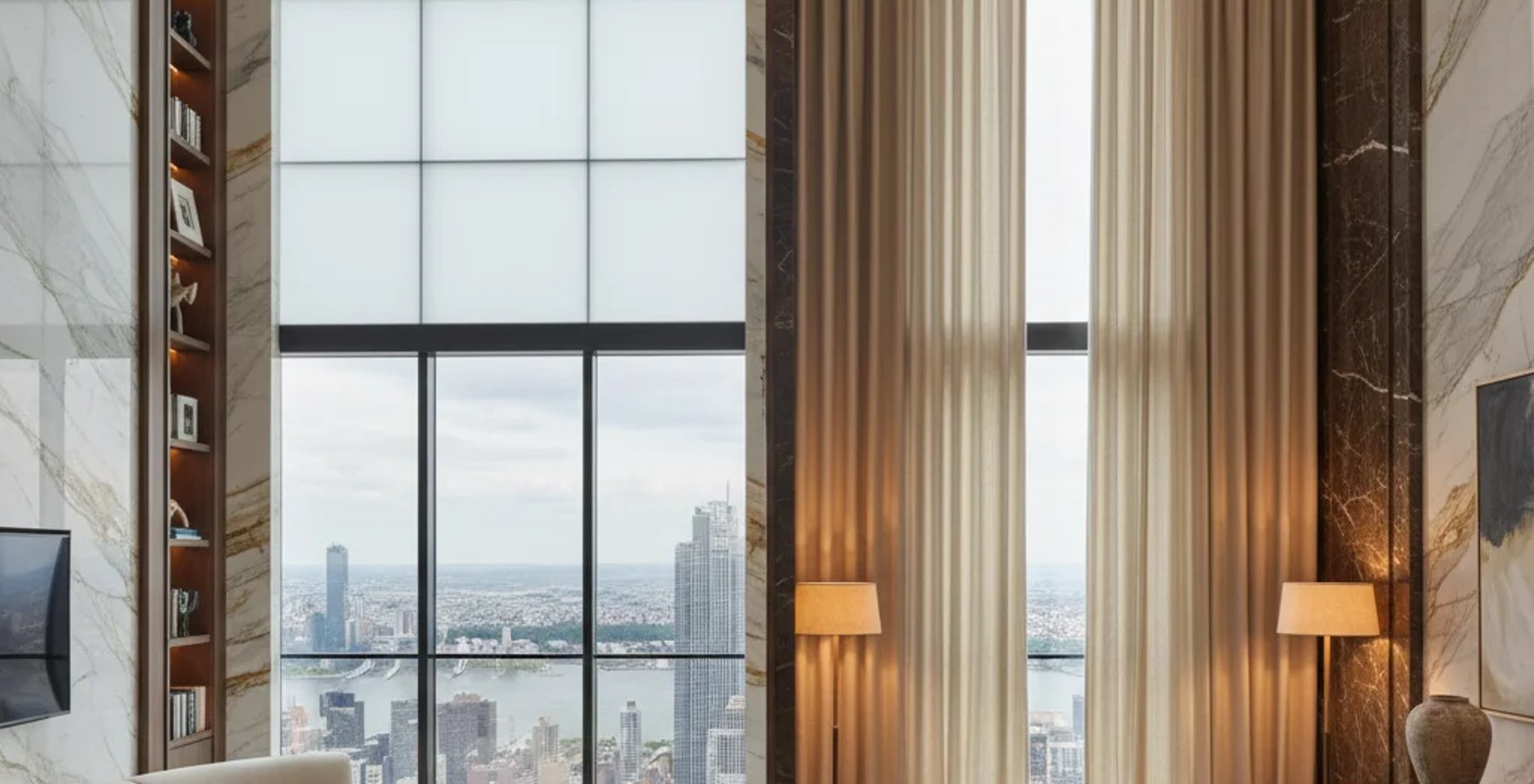
Table of Contents (7 sections)▼
---TITLE--- Smart Glass (PDLC) vs. Motorized Acoustic Curtains: The Definitive Guide for Mumbai Sea‑Facing High‑Rise Apartments
---SUMMARY--- A concise 40‑word overview for Google AI: “Compare PDLC switchable smart glass and motorized acoustic curtains for floor‑to‑ceiling glazing in Mumbai’s sea‑facing towers. Evaluate privacy, solar gain, acoustic performance, cost, maintenance, and compliance with BMC/IS codes to make an informed purchase.”
---BODY---
1. Introduction – Why the Choice Matters in Mumbai
Mumbai’s coastal climate delivers high solar irradiance (≈5.5 kWh/m²/day), humid sea breezes, and persistent traffic noise (70‑85 dB L<sub>eq</sub>). For sea‑facing apartments, the façade must simultaneously:
Two technologies dominate the market: Polymer‑Dispersed Liquid Crystal (PDLC) switchable smart glass and motorized acoustic curtains (often acoustic‑backed, motor‑driven drapery). This guide dissects each on the parameters above, with a focus on Mumbai’s regulatory environment and the premium expectations of sea‑facing buyers.
---
2. Technology Primer
2.1 PDLC Switchable Smart Glass
- Construction: Two glass panes sandwich a thin PDLC film (≈ 30 µm). In the off state, liquid crystals are randomly oriented → opaque/frosted (≈ 70 % light scattering). When a low‑voltage AC (≈ 60 V) is applied, crystals align → transparent (≈ 90 % visible light transmission, VLT).
- Switching Speed: 0.5–1 s.
- Power Consumption: ~ 2 W/m² while in the transparent state; negligible when opaque.
- Acoustic Rating: No intrinsic sound attenuation; relies on glass thickness (typically 12 mm laminated) – STC ≈ 28–30.
- Solar Control: No tinting; solar heat gain coefficient (SHGC) remains unchanged (≈ 0.70 for double‑glazed units).
2.2 Motorized Acoustic Curtains
- Construction: Heavy‑weight, acoustically‑treated fabric (e.g., 300 g/m² polyester with a 30 mm visco‑elastic backing) mounted on a motorized track system (SS316 stainless steel).
- Operation: Quiet DC motor (≤ 30 dB) controlled via wall switch, remote, or home‑automation (Zigbee, Wi‑Fi, KNX).
- Acoustic Performance: STC 30–38 depending on fabric density and backing; can exceed STC 35 with double‑layer systems.
- Solar Control: Fabric blocks up to 85 % solar heat; can be selected in light‑filtering or blackout finishes.
- Power Consumption: < 5 W per motor per operation; negligible standby.
---
3. Comparative Matrix
Bottom line: PDLC excels in instant privacy and visual continuity but offers no solar or acoustic mitigation. Motorized acoustic curtains deliver substantial heat and noise reduction at a lower cost, with a modest trade‑off in visual sleekness.
— ERENDERS EDITORIAL · COMMUNITY FOLIO · 2026
---
4. Material Engineering Considerations for Mumbai High‑Rises
---
5. Execution Timeline & Regulatory Protocol
| Detailed Engineering | Structural calculations (glass weight, curtain track load), electrical schematics, fire‑
Have a critique or feedback on this architectural concept? Join 1,200+ architects and 3D artists in the Roastitects Community Debate Arena.
JOIN ROASTITECTS DEBATE →Frequently Asked Questions
Technical Q&A from this article — answers expanded for depth and SEO.
Looking for more architectural research & spatial studies?
Browse full-width editorial essays, LOD technical specs, and audio folios in the Community Folio.
Just published
10 Stories to Know Right Now
3 stories
- 01INTERIORS8 min reading timeNov 2, 2026Beyond the Glossy Brochures: The Hidden Costs of Hiring Mass-Market Interior Design AggregatorsERENDERS Architectural Studio
- 02INTERIORS6 min reading timeSmart Glass (PDLC) vs. Motorized Acoustic Curtains: The Definitive Guide for Mumbai Sea‑Facing High‑Rise ApartmentsERENDERS Editorial Staff · Reading now
- 03INTERIORS9 min reading timeOct 29, 2026NRI Interior Design for Mumbai Flat: Remote Consultation, Sample Approval & Milestone OversightERENDERS Editorial Staff
Studio selection
The Creator's Choice
5 picks
- 01INTERIORS8 min reading timeNov 2, 2026Beyond the Glossy Brochures: The Hidden Costs of Hiring Mass-Market Interior Design AggregatorsERENDERS Architectural Studio
- 02INTERIORS6 min reading timeSmart Glass (PDLC) vs. Motorized Acoustic Curtains: The Definitive Guide for Mumbai Sea‑Facing High‑Rise ApartmentsERENDERS Editorial Staff · Reading now
- 03INTERIORS9 min reading timeOct 29, 2026NRI Interior Design for Mumbai Flat: Remote Consultation, Sample Approval & Milestone OversightERENDERS Editorial Staff